Lately, I've been seeing a lot of videos that go something like this:
"Your knees in your 30s be like..."
And then someone jumps off a chair, bends down to pick something up, or gets out of bed acting like their body is completely falling apart.
At first, I laughed. Some of them are funny.
But after a while, I started wondering:
When did 30 become old?
It seems like every year we move the line.
At one point, people joked about feeling old in their 70s.
Then it became 60s.
Then 50s.
Now I regularly see people in their 30s and 40s talking as if physical decline is an unavoidable part of everyday life.
Maybe some of it is harmless humor.
But I also wonder if we're starting to believe it.
Does My Body Know I'm 48?
One of the biggest misconceptions about aging is that we give age credit for things that may have very little to do with age at all.
Age is real.
Our bodies change.
Injuries happen.
Disease happens.
Health conditions happen.
This isn't to say that limitations aren't real. Illness, injury, disability, chronic pain, and health conditions affect people of every age. Someone can have arthritis at 25, 45, or 75. Those limitations are real.
What I'm questioning is our tendency to treat age itself as the explanation for everything.
In fact, I don't think my body knows that I'm 48.
It knows that I'm aging.
It knows if I'm active or sedentary.
It knows if I'm strong or weak.
It knows if I'm carrying extra weight.
It knows if I'm recovering from an injury.
It knows if I'm dealing with a health condition.
But I don't believe it knows that I'm 48.
What it knows is the life I've lived.
When my knees hurt, is it because I'm 48?
Or is it because I've been sitting more than moving?
When I gain weight, is it because I'm older?
Or is it because my habits changed?
When I feel weak, is it because of my birth certificate?
Or is it because I haven't challenged my body in a while?
Those questions aren't always comfortable, but I think they're worth asking.
Sometimes I wonder if we use age as the first explanation because it's easier than examining everything else.
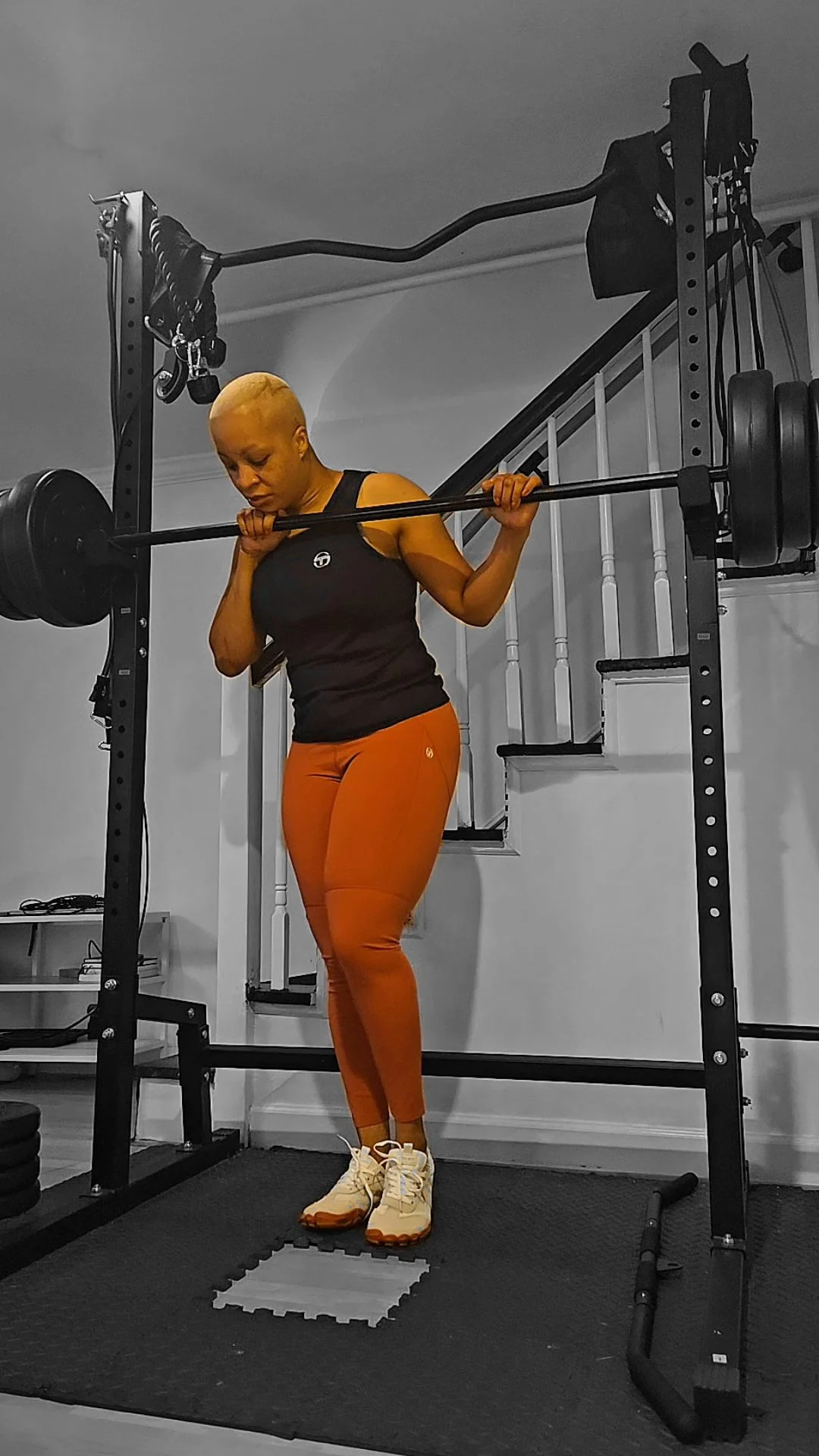
Still becoming.
What Changed for Me
A few years ago, during the COVID-19 pandemic, I gained a lot of weight.
I could have blamed my age.
I could have blamed periomenopause.
I could have blamed being busy.
To be fair, some of those things probably played a role.
But they weren't the whole story.
The bigger truth was that, like so many of us during lockdown, my lifestyle had changed. I was staying up late eating ice cream, sleeping maybe six hours a night, and spending too much time on the couch watching Netflix.
So I made changes.
I joined a gym.
I hired a trainer.
I started lifting weights.
What surprised me wasn't that I lost weight.
What surprised me wasn't that I lost weight.
What surprised me was discovering what my body was still capable of doing.
For most of my life, I didn't think much about my health.
I was naturally thin, so it simply wasn't something I focused on.
I didn't start taking my health and fitness seriously until my 40s.
I learned I was capable of more than I thought.
At the same time, I've learned that acknowledging limitations is different from surrendering to them.
I had breast cancer years ago, and there are physical challenges that came with that experience. There are things about my body that will never be exactly the same.
But I've learned there's a difference between acknowledging limitations and surrendering to them.
As I’m writing this article, I’m reminded of a fascinating episode of Japan with Sue Perkins featuring the Ama women—Japanese free divers who continue diving for seafood well into their later years.
Some of the women were in their 70s and 80s.
They put on wetsuits.
They entered the water.
They worked.
They lived.
Not because they were superhuman.
Because they never accepted the idea that a certain birthday automatically meant they had to stop.
At 48, I'm Still Becoming
That's what I keep coming back to.
Age is a fact.
It's not an identity.
It's not a prediction of what happens next.
The older I get, the more I realize that age isn't what keeps most people stuck.
It's the stories we attach to it.
That we're too old.
Too late.
Too far behind.
That if we haven't started by now, we missed our chance.
I understand that thinking because I've had those thoughts too.
But every time I learn a new skill, try something uncomfortable, or surprise myself in the gym, I'm reminded of something:
My age didn't make that decision.
I did.
There are things I can't do the same way I did at 20.
That's true.
But there are plenty of things I can do now that I couldn't do then.
Not because I'm younger.
Because I kept going.
At 48, I'm not finished becoming who I'm going to be.
And maybe that's the point.
Not pretending age doesn't matter.
Just refusing to let it decide what's possible.
Enjoy exploring what's beneath the surface?
Visit the Perspective page to subscribe to future thoughts and reflections.
